Learn to play
Short lessons on the real table, with a coach next to you. No account needed.
Quick rulesStart from zero. 6 lessons teach the rules on a real table, then 3 more show how this table works.
About 15 minutes, and you can stop any time.9 lessons · about 15 minStart with the rulesYou know the game, but not this table yet. 3 short lessons show how to throw, take and grab on this screen, how to shuffle and cut, and where everything is.
About 5 minutes. The rules are skipped for you.3 lessons · about 5 minIn a hurry? You can skip every lesson and go straight to the tables. You would miss how the buttons work here.
In a hurry?
Rules
How Cuarenta is played.
- 1
The deck and the goal
40 cards, the perros as your tally, first to 40.
Start - 2
Your turn
Lay a card, capture by match, and how Throw works.
Start - 3
Sums and the escalera
Capture by adding, and take the run that follows.
Start - 4
Caída and limpia
The two plays that score as you go.
Start - 5
Ronda and cuarenta
Three of a kind, four of a kind, and answering a ronda.
Start - 6
End of a hand
The cartón, the 30 and 38 rules, and the counting rhyme.
Start
Using the app
How this table works: worth it even if you know the game.
Quick rules
Cuarenta on one page, to look something up while you play or after a lesson.
Tap a rule to open it.
The deck
Forty cards: A, 2, 3, 4, 5, 6, 7, J, Q and K in four suits. There are no 8s, 9s or 10s. The suit never matters.

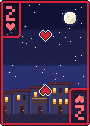
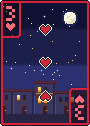
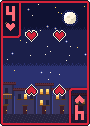
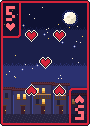
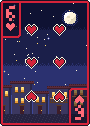
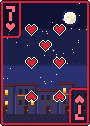
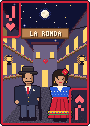

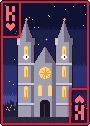
The ace is worth 1 and the 2 to the 7 are worth their number. The J, Q and K are worth nothing: they never go in a sum. The order is A, 2, 3, 4, 5, 6, 7, J, Q, K: the J comes right after the 7.
The goal
The first side to reach 40 points wins the game. The perros (the 8s, 9s, 10s and the two jokers) keep the score: a perro face up is worth 2 points and one face down is worth 10. Five face up become one face down.


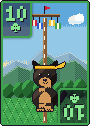
Points come from caídas, limpias, rondas and the cartón at the end of the hand. The room can play one game, or the best of three.
Dealing and seats
The dealer shuffles, the player who plays right before the dealer cuts, and then the dealer gives 5 cards to each player. When the hands are empty, 5 more, until the 40 cards are used. The table starts empty.
Play goes counterclockwise and the player after the dealer starts. In 1 vs 1 the two players take turns. In 2 vs 2 partners sit across from each other and share one score and one cartón.
Your turn
You play one card on each turn. You can lay it on the table, or capture with it. Capturing is never forced.
Pick your card, pick the table cards you want to take and press Throw, or drag your card onto the table. If what you picked is not a legal capture, nothing happens and you try again.
If the clock runs out, the first card you were dealt is laid for you.
Capture by match
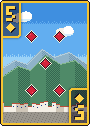
Play a card with the same number as one on the table and take that one. If there are two of that number, you take only one. Figures (J, Q, K) can only be captured this way.
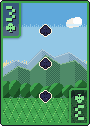
Capture by sum
A card from A to 7 can take two or more table cards whose numbers add up to its own: a 5 takes 2 + 3, or A + 4. Figures never go in a sum. You cannot join a match and a sum in the same play.
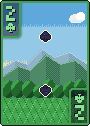
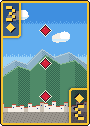
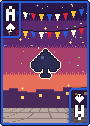
The escalera
After a capture you may also take the cards that follow yours in order, one of each number and with no gap: A 2 3 4 5 6 7 J Q K. Take as far as you like, from none to the whole run. It never wraps: after the K there is nothing.
Here the 5 takes 2 + 3 and then the 6, the 7 and the J.
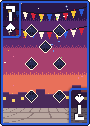
If you stop before the end of the run, the cards left are free for 5 seconds: anybody can press Grab and take them, you included. Grabbing is not a turn and scores nothing.
Caída: 2 points
Take, by a match, the card your opponent has just laid without capturing anything. Only that last card counts: one laid before it, or taken by a sum, is not a caída. It scores 2 points at once.
There is no caída on the first play of a deal, unless your team has caídas in a row going.
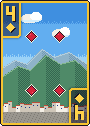
Limpia: 2 points
A capture that leaves the table empty. Laying a card on an empty table is not a limpia. If one play is a caída and a limpia, it scores 2 once (a room can change it to 4).
Ronda: 2 points
If you are dealt three cards of the same number, it is a ronda: 2 points for your team, counted by the game on its own. The table is told that a ronda exists, but not who has it or which number.
Caída on a ronda: 10 points
If you think the card your opponent just laid belongs to their ronda, press Caída on ronda before you play, and then make a caída on that number: 10 points instead of 2.
You get one try for each ronda, and only while your team has fewer than 30 points. On a different number it is a normal caída and the try is spent.
Cuarenta: you win
All four cards of one number in your hand win the game at once, at any score.
End of the hand: the cartón
When the 40 cards have been played, each side counts its cartón, the cards it captured. Cards left on the table count for nobody. Each side scores only for its own cartón.
| Cards in the cartón | Points |
|---|---|
| Fewer than 20 | 0 |
| 20 | 6 |
| 21-22 | 8 |
| 23-24 | 10 |
| 25-26 | 12 |
| And so on | 2 more for every 2 cards |
The counting has an old rhyme, one card for each beat, so the 16th card lands on the 16: taita y mamá se va a misa, taita y mamá va a volver, cuando vuelva taita y mamá yo ya cuento 16, 17, 18, 19… From the 20th card on, a second pile counts the points: 6, then one more for each card.
The 30 and 38 rules
From 30 points up, your cartón is not cashed, but caídas, limpias and rondas still score.
At 38 points you are out of play: only a caída (2 points) can win the game, and nothing else scores. The other side scores as usual.
Four caídas in a row
Four caídas in a row by the same team, with no other play of that team in between, win the game at once, at any score. The flames next to the score count them.
Winning
The game ends the moment a side reaches 40, even in the middle of a hand. If both reach 40 together at the count, the higher score wins, and a tie plays one more hand.